What it is
Hematite is an iron mineral, and it's everywhere — it's what gives rust and red soil their color. Polished, it turns a deep gunmetal black with a mirror shine. It feels dense and cool on the wrist, which is a big part of why people like wearing it.
In bracelets, the beads are magnetized — hold two together and you feel the quiet pull. The strand itself is stretchable, so it rolls on easily and fits most wrists. Curious how that works? We explain it in Is hematite magnetic?.
An old stone, still current
People have decorated themselves with hematite for a very long time — it's one of the oldest ornament stones in the world, worn by the ancient Egyptians and carved into Roman seal rings. Polished black hematite had a big moment again in the Victorian era, and magnetized beads brought it into modern jewelry in the 1990s.
In other words: a stone with serious history, wearing a very modern look.
Why people wear it
Simply: it looks good. The dark metallic finish reads as jewelry without being flashy, and it works with everything — a suit sleeve, a rolled-up shirt, a t-shirt in summer.
It's genuinely unisex, too. Nothing about the color or shape leans masculine or feminine, which is rare in jewelry and part of why these bracelets are so often bought as gifts and worn in pairs.
Paired with turquoise, jade, lapis, tiger eye or pearl, the same dark stone takes on a completely different mood — every bracelet in our collection is built that way.
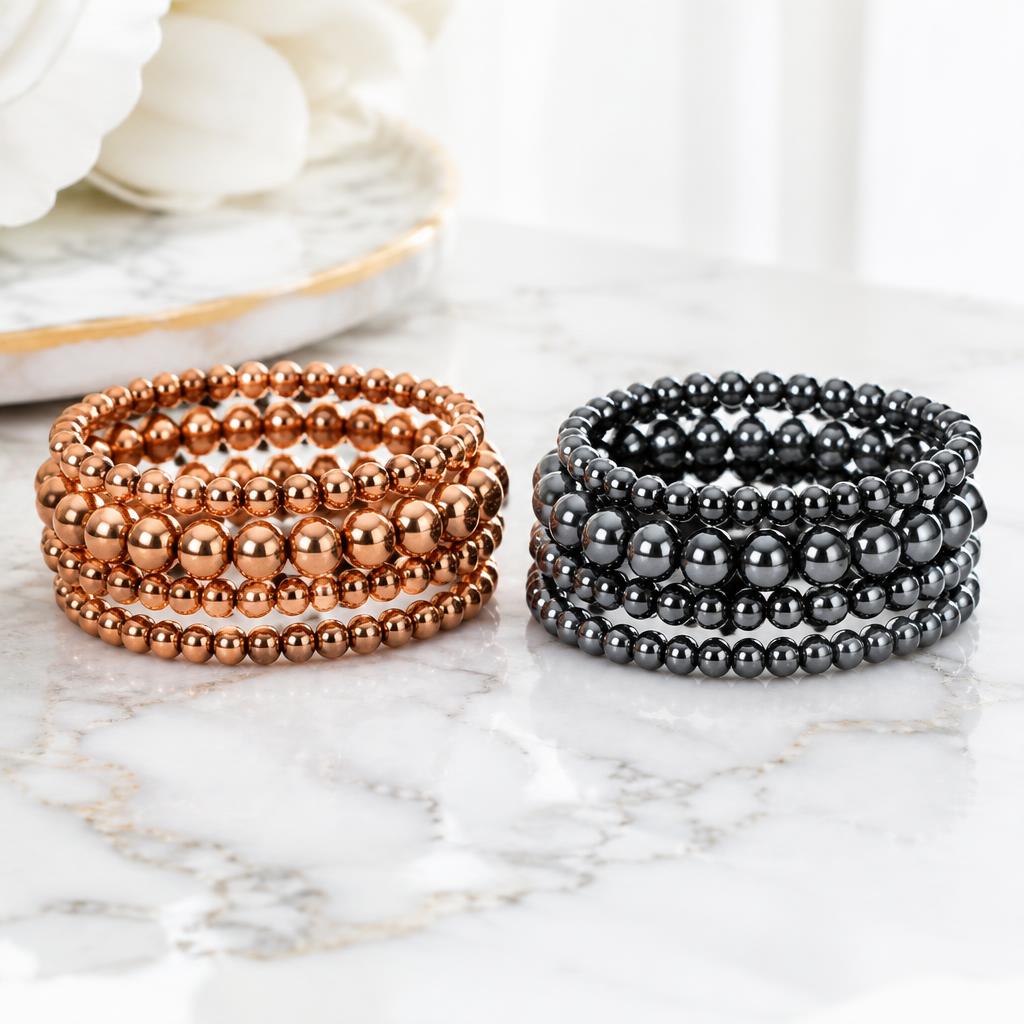
Copper and hematite: two very different materials
Copper brings warmth to the cool gunmetal look of hematite. It is a naturally reddish metal that can be hammered, brushed or polished, while hematite is an iron-rich mineral with a much darker, mirror-like surface. Putting the two together creates contrast without relying on bright color. Copper itself is not a permanent magnet. In a magnetic copper bracelet, separate magnets are normally fitted into a cuff or link, while a bracelet sold as magnetic hematite usually relies on manufactured magnetic beads.
That distinction matters because appearance, composition and magnetism are three separate things. A copper-colored part may be solid copper, copper-plated alloy or another metal entirely. Likewise, “magnetic hematite” is a jewelry trade term often used for polished ferrite beads made with iron oxide. Understanding the construction makes the bracelet more interesting: each design balances color, weight, surface finish and magnetic components in its own way.
MagBrace makes no health or medical claims of any kind. These bracelets are jewelry — worn for how they look and feel, nothing more.
See the collection