Style guide
Men's hematite bracelets
Hematite has quietly become the go-to men's bracelet stone — dark, metallic and understated, the kind of bracelet that disappears under a shirt cuff until you want it noticed. Here is why it works so well for men, and what to look for.
Why hematite suits a men's bracelet
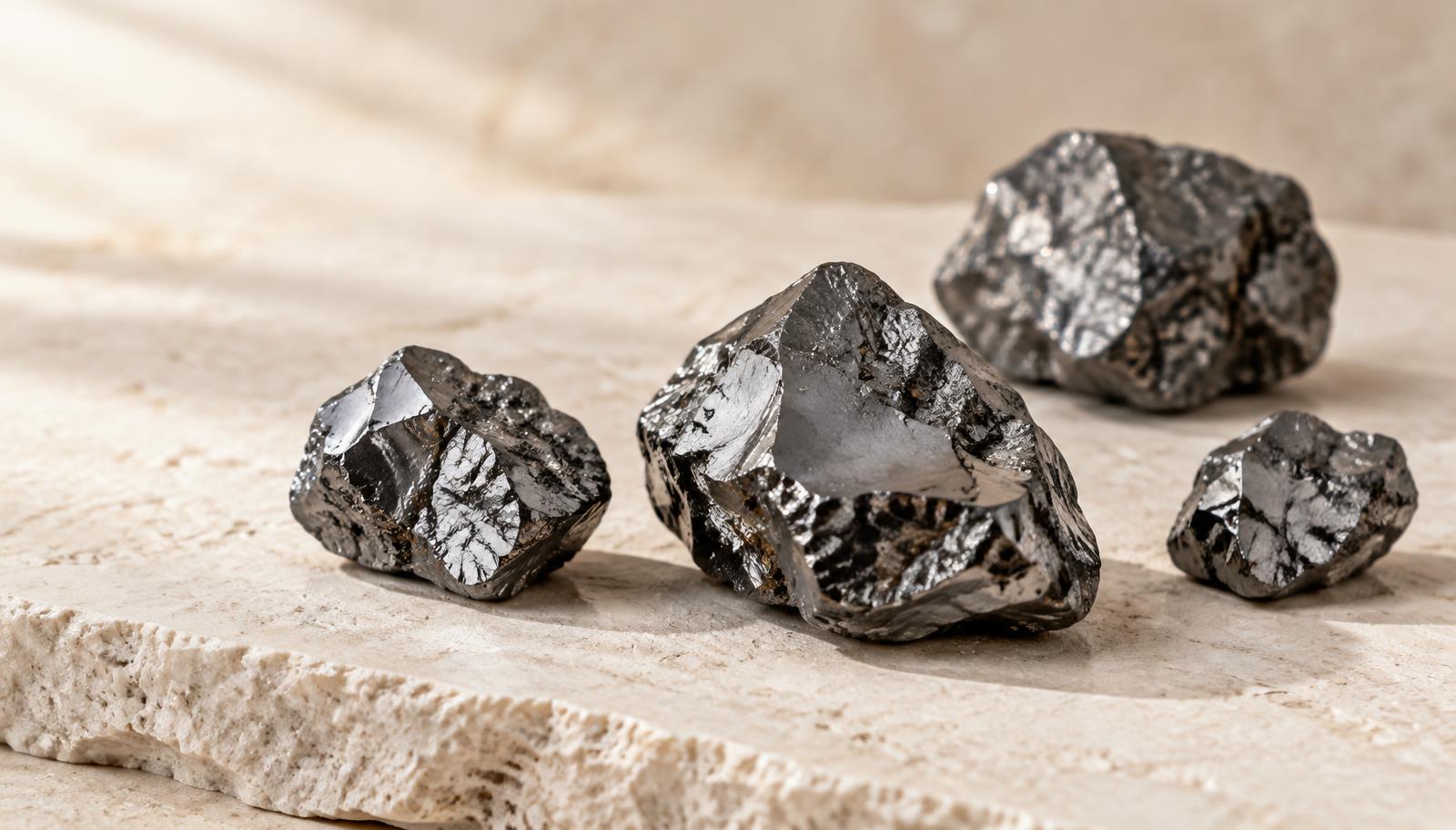
Most men's jewelry problems come from the same source: too much shine. Gold and polished silver are loud. Hematite is the opposite — a deep charcoal-black stone with a soft metallic sheen, closer in tone to a gunmetal watch case than to a dress ring. It reads as metal without shouting, which is exactly why it has become the default stone in men's beaded bracelets.
It is also a genuinely natural material. Hematite is iron ore — the same mineral that was ground into pigment for some of the oldest artwork humans ever made — cut and polished into dense, mirror-finished beads. A hematite bracelet has real weight on the wrist. That heft is a large part of why it feels substantial rather than flimsy, and why men who would never wear a light beaded strand are comfortable wearing hematite.
The suit-sleeve test
The real measure of any men's bracelet is whether it survives contact with a shirt cuff and a watch. A good hematite bracelet passes easily: the beads sit low and smooth, the strand is slim enough to slide under a sleeve without catching, and the dark color never clashes with a watch strap or a wedding band. Worn alone, it reads as understated. Worn next to a steel watch, the black stone and the brushed metal pick each other up.
Fit matters more than men usually expect. Our bracelets are stretchable double rows of beads that roll on easily and fit most wrists, which means no fiddling with sizing and no loose links rattling against a keyboard. If you have ever returned a link-style bracelet because it was a half-size off, this is the fix.
Choosing a color
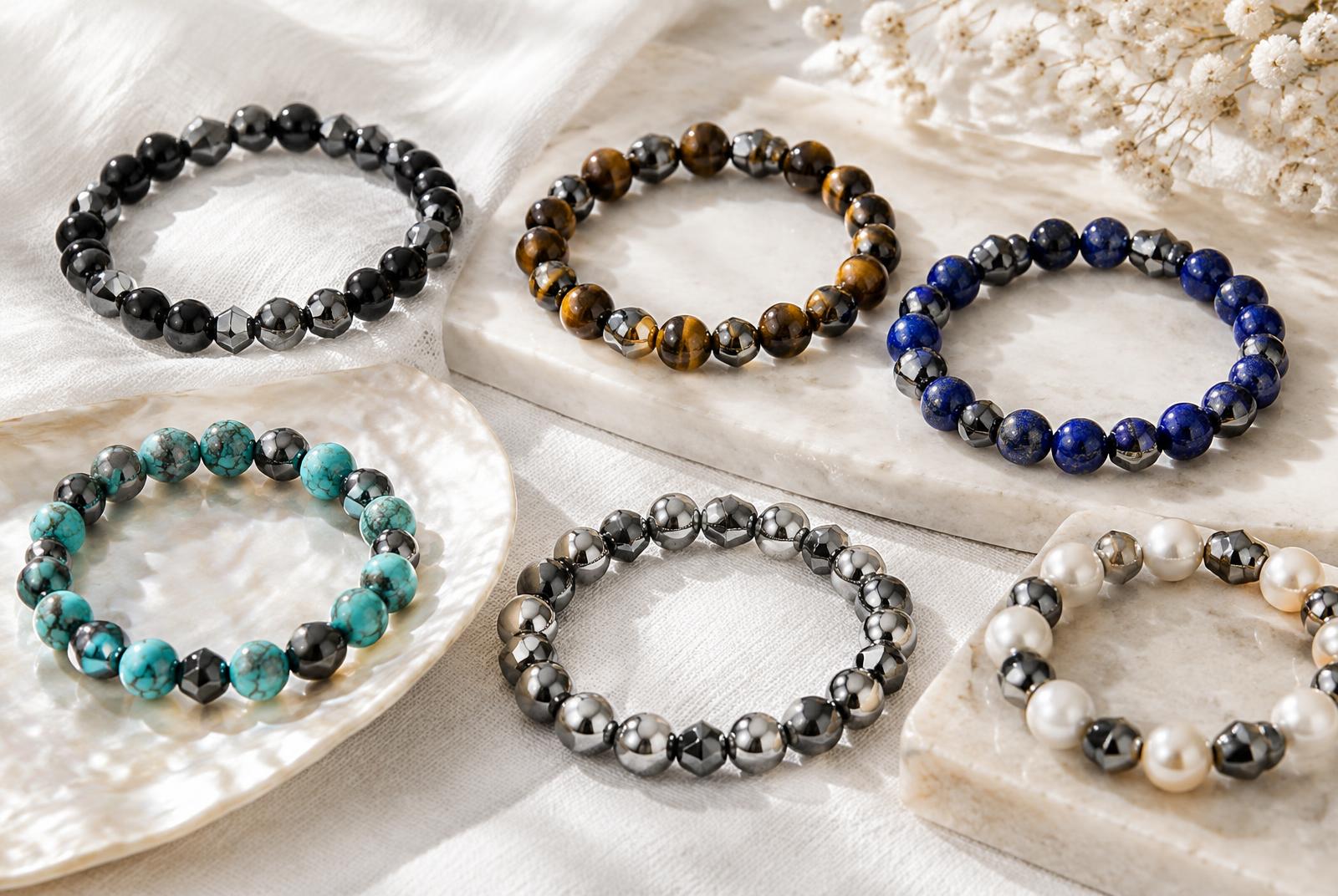
The classic men's choice is all black hematite — dark beads, no accent, maximum restraint. It is the version that goes with literally everything in a wardrobe. But hematite strands often carry a second row of accent beads, and a few of them lean masculine without trying:
Tiger eye — warm brown bands of light, the most traditional men's stone after hematite itself. Lapis — a deep, serious blue that works like a navy tie. Silver-tone beads — brighten the strand toward a watch-bracelet look. Black — the default, and still the best first bracelet.
The full range runs through turquoise, jade, amethyst, pearl and blue as well — every color in the collection is the same dark double-row design, so switching accents is a change of mood, not of style.
How men wear them
On either wrist — there is no rule, though many men wear a bracelet on the opposite wrist from their watch so the two never compete for space. One strand is the everyday move; two stacked strands in different accent colors is a slightly bolder version of the same idea. Because the design is unisex at heart, nothing about the bracelet announces itself as men's or women's jewelry — it simply looks right.
What to look for before buying
Not all hematite is the real stone. Glass, plastic and dyed imitations are common, and they are lighter and duller than the real thing. Three quick checks cover most of it: real hematite feels heavy for its size, has a mirror polish rather than a painted gloss, and is cool to the touch when you first put it on. A magnetic hematite strand also holds together with a gentle pull between the beads — something glass never does.
For the full checklist — drill holes, cord quality, the scratch and streak tests — see our guide to telling real hematite from fakes.
One honest boundary
Magnetic hematite bracelets are fashion jewelry. We make no health or medical claims of any kind about magnets, hematite or anything else — a men's hematite bracelet is worn for how it looks and feels, the same reason a man wears a good watch. Anyone with a pacemaker or an implanted medical device, and anyone who is pregnant, is commonly advised to avoid magnetic jewelry as a general precaution.
MagBrace makes no health or medical claims of any kind. These bracelets are jewelry — worn for how they look and feel, nothing more.
Copper as an alternative to all-black
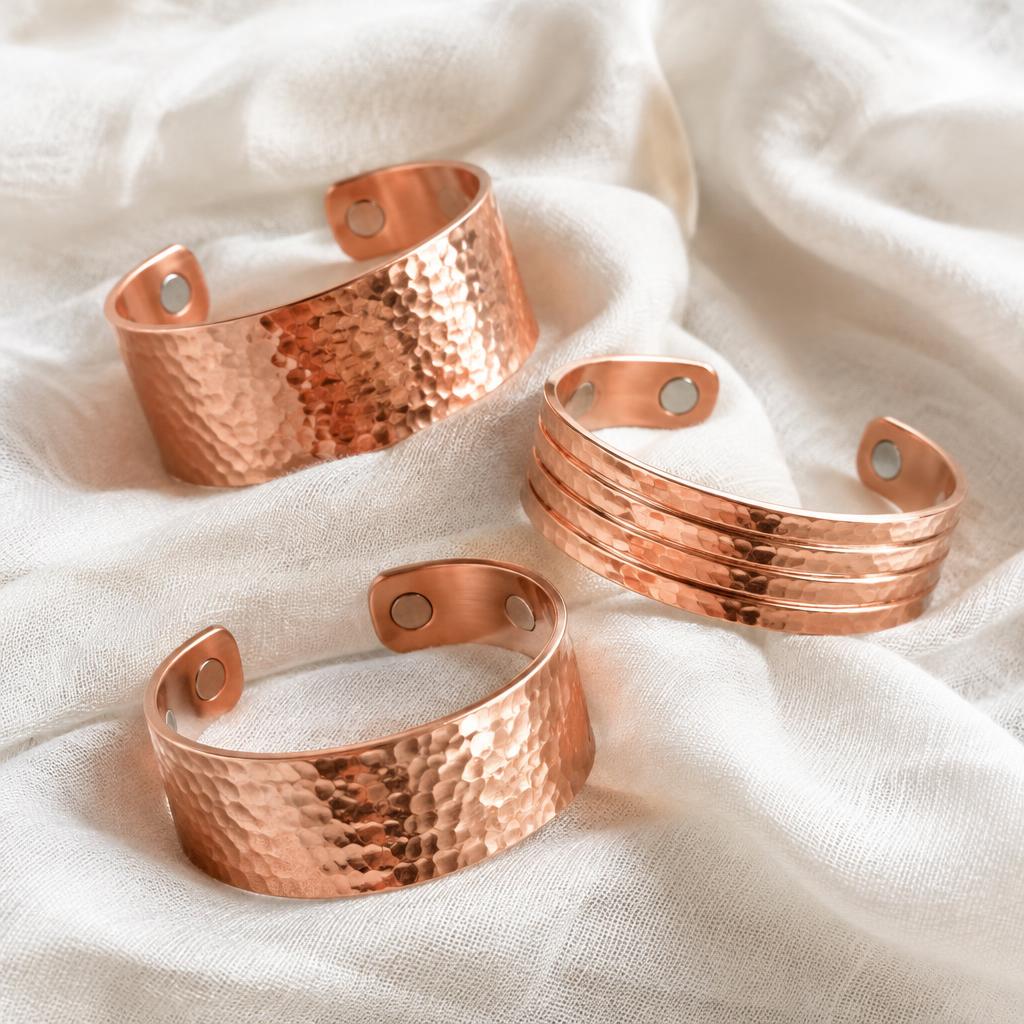
An all-black hematite bracelet is restrained, but copper offers a warmer route without becoming flashy. A hammered cuff or a few copper accents break up the gunmetal surface and work particularly well with navy, olive, brown leather and denim. The combination still reads as understated because both materials have an elemental, substantial look rather than the sparkle of faceted transparent stones.
For office wear, a single slim piece usually passes the sleeve test more easily than a large stack. Check that an open cuff has smooth inner edges and enough room to sit without pinching. With a watch, place hard stone beads where they will not rub constantly against the case. Magnetic components are simply part of the construction; the reasons to choose the piece are its proportions, finish, durability and how naturally it fits the rest of a wardrobe.