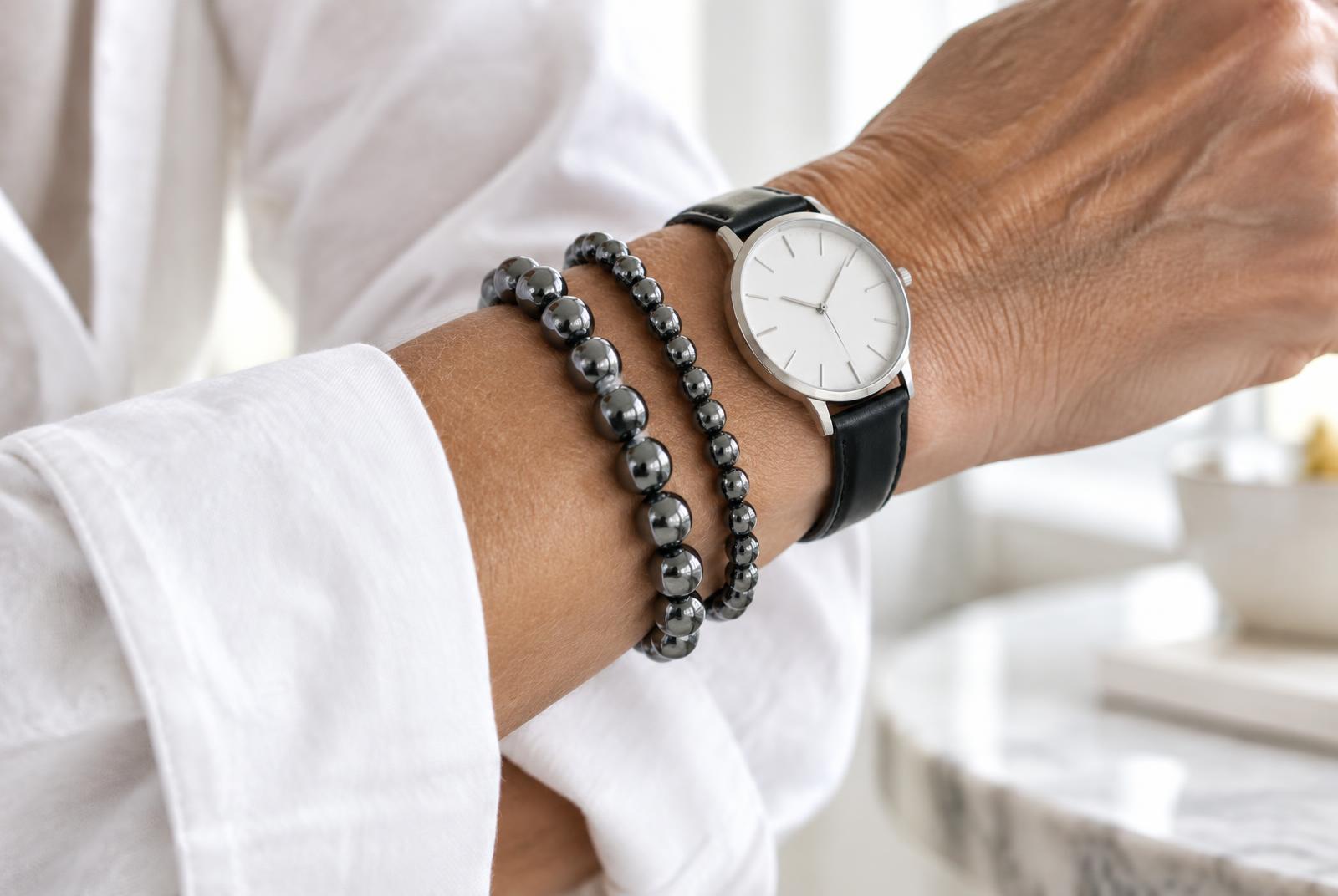
Guide
What to look for in a hematite bracelet
Hematite jewelry ranges from beautifully finished to barely acceptable, and the difference is visible in about ten seconds once you know where to look. Here is what separates the two.
First: what 'magnetic hematite' actually means
Hematite is iron oxide — the same mineral that colors rust and red soil. Straight from the ground it is only weakly attracted to a magnet; you would need a careful test to notice. The strong snap you feel in a bracelet comes from beads that were magnetized during manufacturing so they hold a lasting charge.
So "magnetic hematite" is a description of the finished bead, not a claim that the raw mineral is a magnet. Sellers who insist the stone is naturally magnetic are either confused or hoping you are. It is still real hematite — the same iron mineral with the same gunmetal shine — with magnetism added on purpose.
Reading the polish
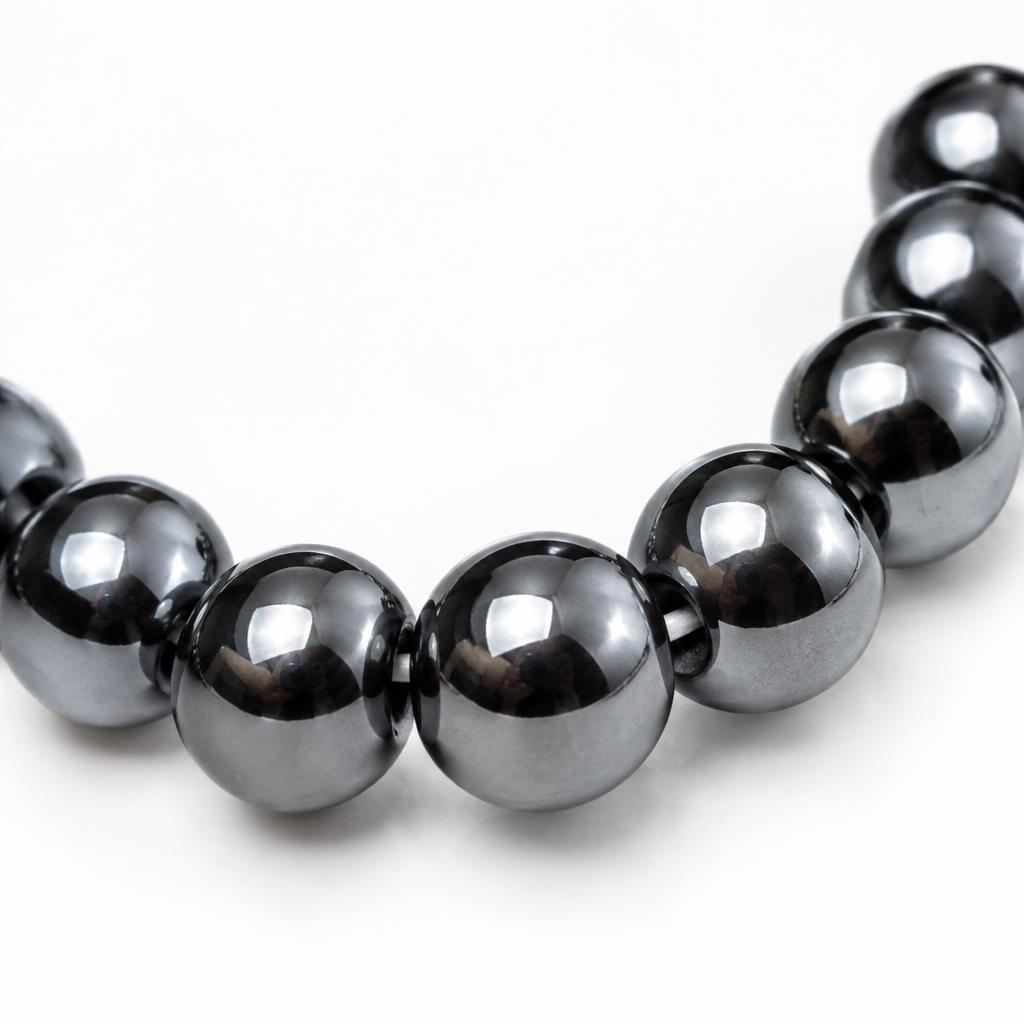
Well-finished hematite behaves like a tiny mirror: hold it up and you should see a sharp, undistorted reflection with a slightly cool, steely cast. Cheap beads look grey and matte-ish under the same light, or show fine swirl marks from a rushed tumble.
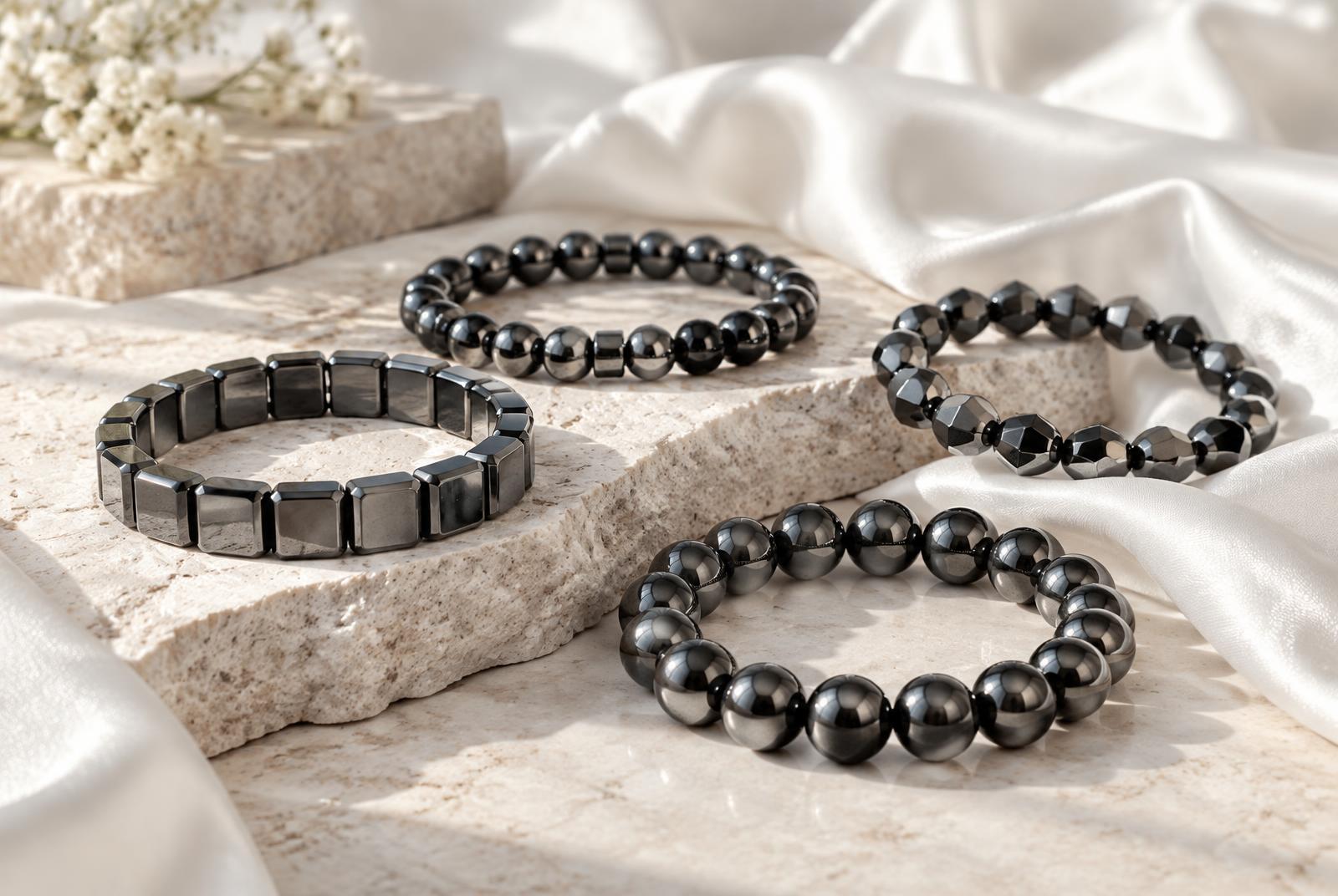
Check the edges too. On the rectangular beads, the corners should be crisp and consistent from bead to bead; rounded, uneven corners mean the batch was over-tumbled to hide flaws.
Drill holes and alignment
This is the detail nobody photographs and everybody feels. Holes should be centred and clean. Off-centre drilling makes beads sit at slight angles, so a finished strand looks subtly crooked no matter how you lay it out. Chipped rims around the holes mean the drill was blunt, and those chips grow with wear.
On a double-row bracelet, hold it flat and look along it. The two rows should track parallel. Wandering rows almost always mean inconsistent bead sizing.
The cord you can't see
On a stretchable bracelet the elastic is the weakest link and the least discussed. Good construction shows almost no cord between beads when the bracelet is at rest, stretches smoothly rather than in jerks, and returns to shape immediately. If a new bracelet already shows slack cord, it will not improve.
Multi-strand elastic lasts far longer than a single thin filament, and a properly knotted and glued join disappears inside a bead rather than sitting visible between two.
Weight, temperature and the imitation test
Hematite is dense — noticeably heavier than glass or plastic of the same size — and it feels cool against the skin for a second or two before warming. Plastic imitations warm instantly and feel weightless. Painted or coated beads often give themselves away at the drill hole, where a different color shows through.
A classic mineral test is the streak: rubbed on unglazed ceramic, hematite leaves a reddish-brown mark rather than a black one. It is not a test to run on jewelry you like, but it is the reason hematite got its name, from the Greek word for blood.
Questions worth asking a seller
Is the hematite natural stone or a reconstituted composite? Are the beads magnetized, and how strongly? Is the bracelet strung on elastic, and can it be restrung? What is the measured length at rest, not just "one size"? A seller who answers all four plainly is usually worth buying from.
And be wary of any listing that sells the stone on what it will do for your body. A good hematite bracelet is sold on material, finish and construction.
MagBrace makes no health or medical claims of any kind. These bracelets are jewelry — worn for how they look and feel, nothing more.
Reading a magnetic copper bracelet listing
Copper itself is not a permanent magnet, so a magnetic copper bracelet contains separate magnetic components. On an open cuff, these are often small discs set into the inner ends. On link styles, they may sit behind individual panels. Look for clear photographs of the inside as well as the decorative face. Magnets should sit evenly in clean recesses without sharp edges, dried adhesive or obvious gaps around them.
Also check whether the seller identifies the metal as solid copper, copper-plated alloy or simply copper-colored. Solid copper can darken throughout and be polished again; plating may eventually reveal a different base metal. Neither option is automatically wrong, but the description should be accurate. Useful listings explain dimensions, weight, finish and construction instead of leaning on exaggerated gauss numbers or health promises. Good information is a stronger sign of care than dramatic claims.