Timeline
Seventy thousand years of a very dark stone
How hematite travelled from ground pigment to polished bead — and how magnetized beads on stretch cord became the bracelet you know today.
c. 70,000 BCE
Ground for color, not for jewels
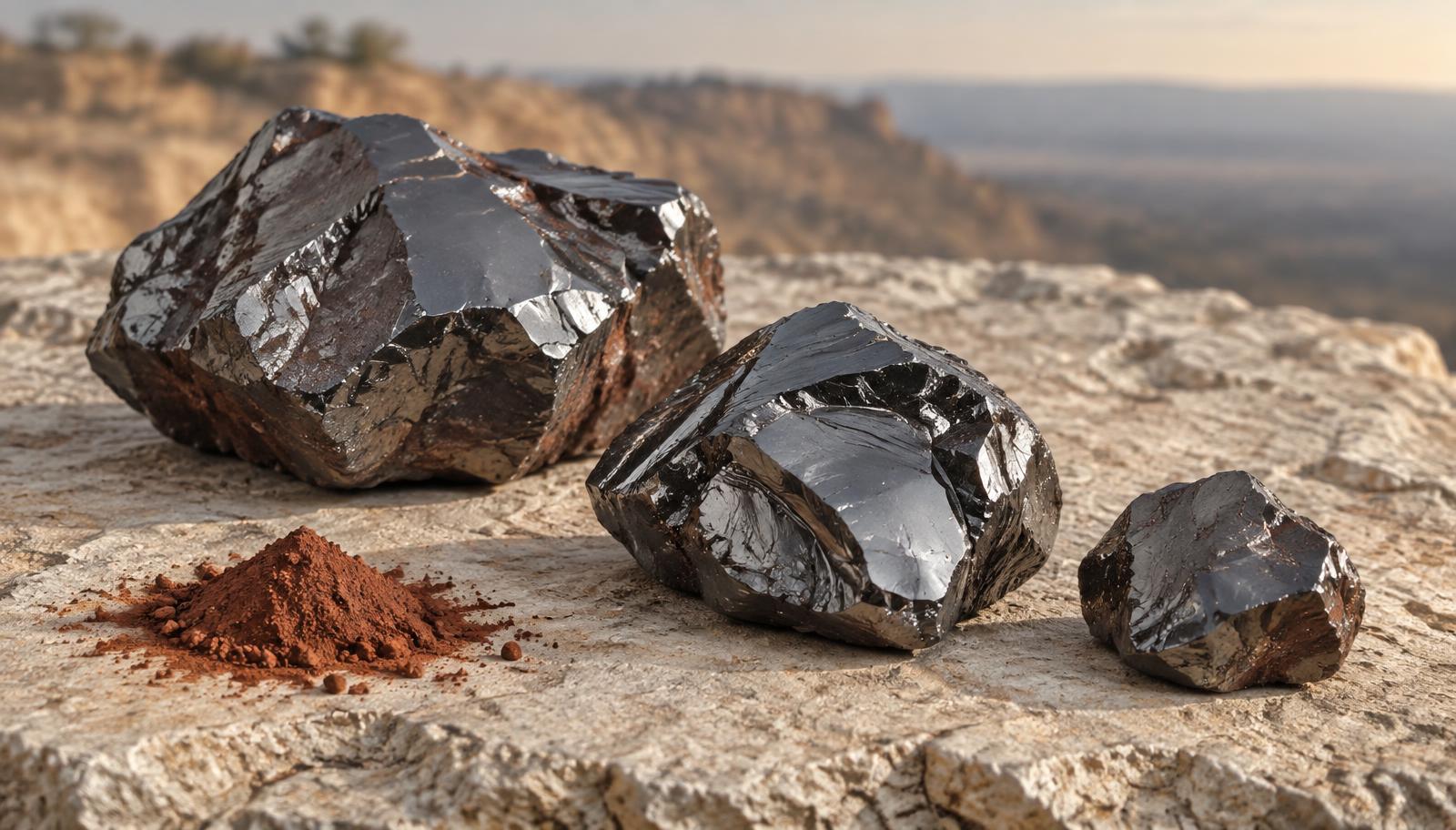
Long before it was worn, hematite was crushed into red ochre — the earliest pigment humans used for painting bodies, walls and burial sites. The name comes later, from the Greek haima, blood, for the red streak it leaves.
c. 3,000 BCE
Egypt polishes it dark
Egyptian workshops cut hematite into beads, amulets and carved scarabs. Polished, the red stone turns a deep mirror-black — the same finish you see on a bracelet today.
c. 500 BCE – 400 CE
Greek and Roman seal stones
Engravers favored hematite for intaglio seal rings: hard enough to hold fine detail, dense enough to feel important in the hand. Ancient writers grouped it with the ornamental stones of the age.
1200s – 1500s
The compass changes the story
Iron's magnetism enters written record through the lodestone compass. Hematite and magnetism are now part of the same conversation about iron-bearing stone.
1840s – 1890s
The Victorian black moment
Mourning and evening dress created huge demand for dark, glossy stones. Faceted hematite appears in brooches, bead strands and cut-steel-look jewelry across Europe.
1930s – 1960s
Machine-cut beads, mass appeal
Modern bead-cutting and tumbling equipment made uniform hematite rounds and rectangles affordable, and the stone became a staple of everyday costume jewelry.
1990s
Magnetized beads arrive
Jewelry makers begin selling strands of magnetized hematite beads — synthetic or treated so each bead holds a magnetic field. Hold two together and you feel the quiet pull. It becomes one of the decade's most recognizable jewelry looks.
2000s
Stretch cord replaces the clasp
Elastic cord becomes standard for bead bracelets. Nothing to fasten, nothing to fumble: a strand slips on and off and fits most wrists — exactly how the MagBrace styles are made.
Today
A dark stone, paired with color
The current look sets polished black hematite against a colored companion stone — turquoise, tiger eye, lapis, jade, pearl, amethyst — in double rows that read as jewelry on any wrist, and are genuinely unisex.
This is jewelry history and folklore, nothing more. MagBrace makes no health or medical claims of any kind, and traditions described here are beliefs people have held — not effects.
Copper's long history in adornment
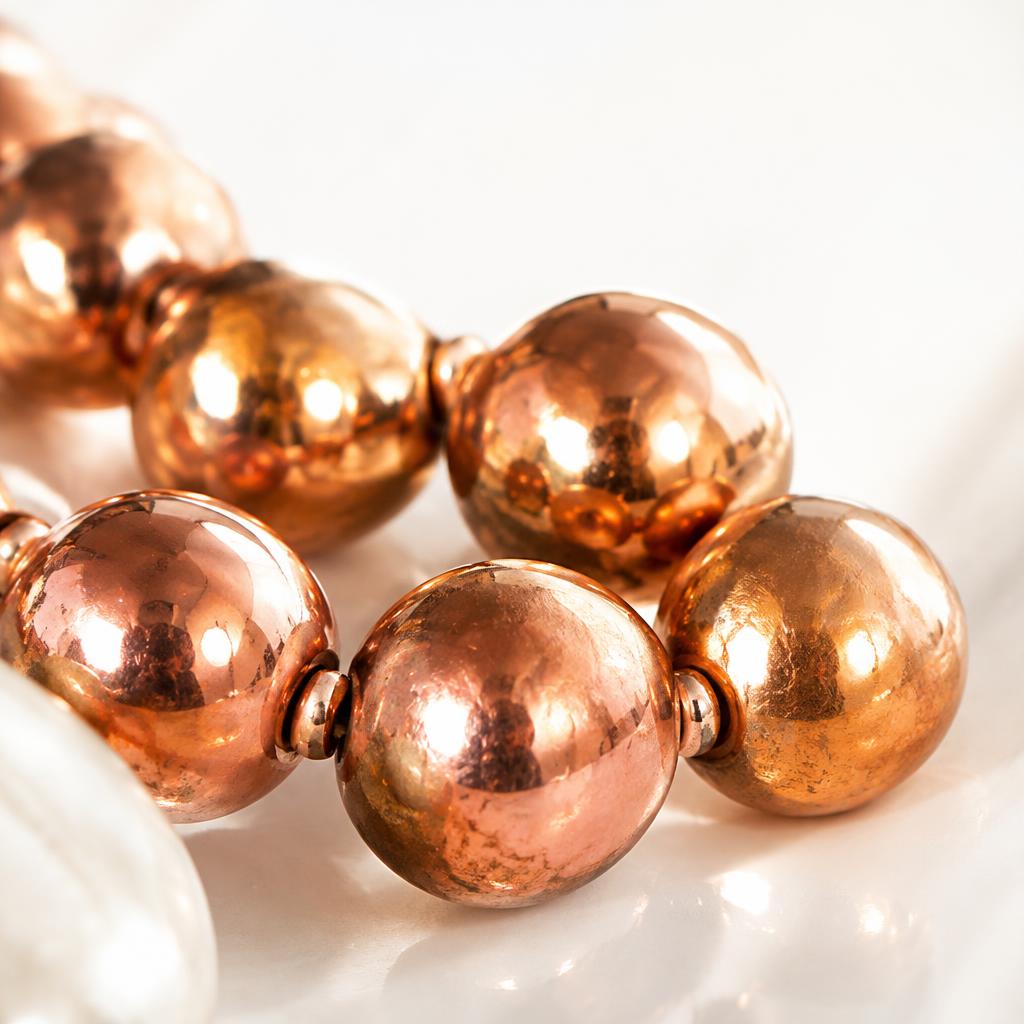
Copper was one of the first metals people learned to shape, with copper beads and ornaments dating back roughly 9,000 to 10,000 years in parts of the Middle East. Ancient Egyptians worked copper into jewelry, tools and mirrors, and later civilizations alloyed it into bronze. Its warm color and ease of shaping made it a natural choice for bracelets and cuffs long before precious metals were widely available.
Over the centuries copper jewelry moved in and out of fashion. Artisans in many cultures hammered copper bands, twisted wire bangles and set stones into copper settings. The modern magnetic copper bracelet, with small magnets fitted into the band, is a twentieth-century design, but it continues a very old tradition of wearing worked copper on the wrist.
Hematite and copper in modern jewelry
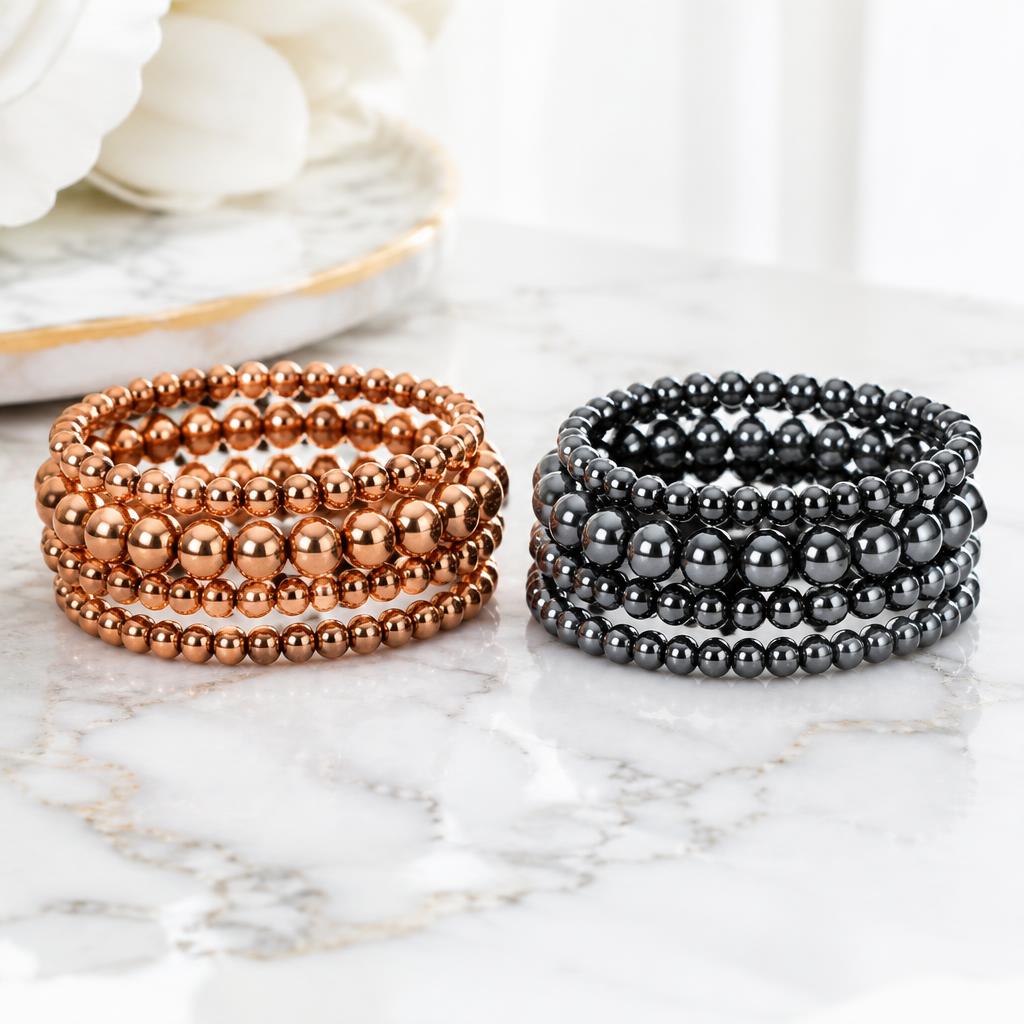
In the late twentieth century, manufactured magnetic beads with a hematite-like finish became widely available, making affordable gunmetal bracelets common in markets and shops around the world. At the same time, hammered copper cuffs enjoyed renewed popularity as handmade and artisan jewelry.
Today the two are often worn together. Designers mix gunmetal beads with copper spacers, and many people stack a copper cuff beside a hematite strand. The combination connects two of the oldest materials in human adornment with a simple, modern, unisex style.