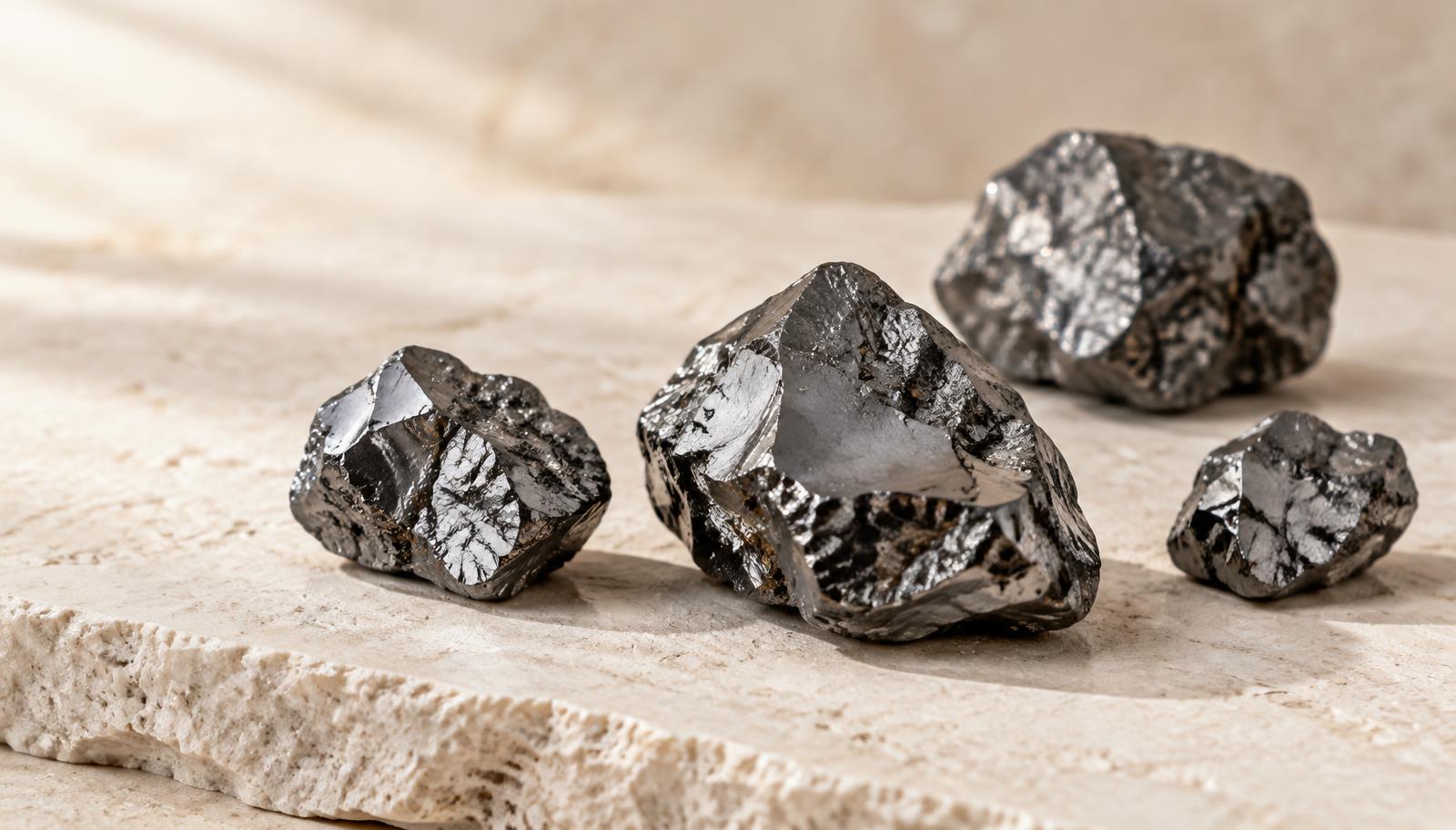
Guide
Caring for a hematite bracelet
Hematite is hard, heavy and naturally glossy — it asks for very little. But a few habits keep the mirror finish sharp and the stretch cord strong for years instead of months.
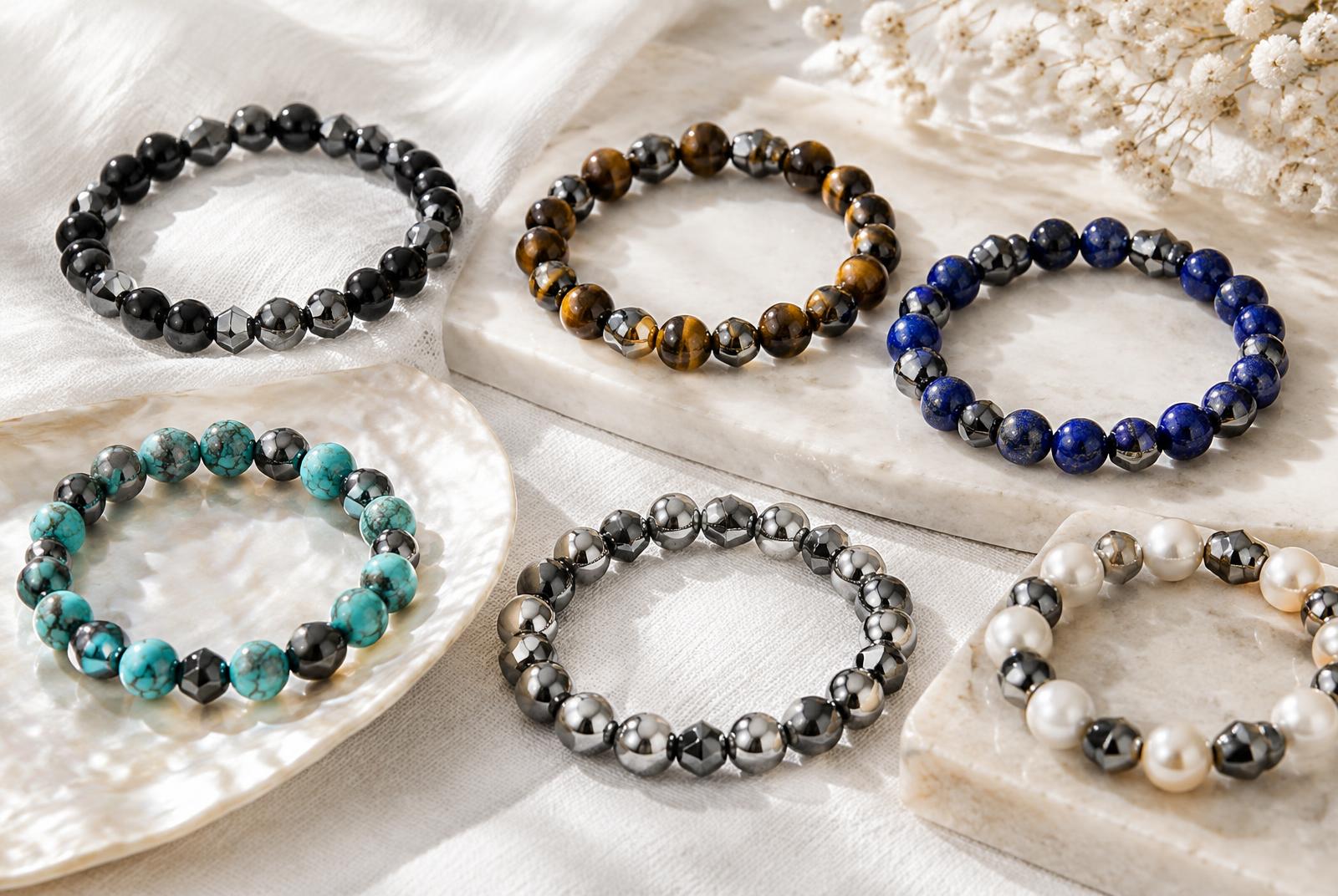
Everyday cleaning
Wipe the beads with a soft, dry cloth after wearing. Hematite's shine is a polished surface, not a coating, and the dulling you see over time is almost always skin oil, lotion and dust sitting on top of it rather than the stone wearing out. Thirty seconds with a microfibre cloth restores most of it.
For a deeper clean, dampen the cloth very slightly with plain water, wipe bead by bead, then dry immediately. Do not soak the bracelet. Water itself will not hurt hematite in a brief wipe, but hematite is an iron mineral, and iron plus prolonged moisture eventually means dull spots or rust freckles at the drill holes.
What to keep it away from
Chemicals. Perfume, hairspray, sunscreen, bleach, and household cleaners are the fastest way to dull a polished bead. A useful rule: jewelry on last, jewelry off first.
Long soaks. Showering, swimming pools, hot tubs and dishwater all combine moisture with chemicals. Take the bracelet off.
Ultrasonic and steam cleaners. These are sold for metal jewelry and are too aggressive for a strung stretch bracelet.
Grit. Hematite is hard, but it is also brittle. A dropped bead on tile can chip. Gardening, gym weights and heavy tools are reasons to set it aside for an hour.
Protecting the stretch cord
The beads will outlive the cord, so the cord is what actually decides how long a stretchable bracelet lasts. The single biggest cause of a broken strand is pulling it over the hand like a rubber band. Instead, roll it on and off over the widest part of your hand with your fingers together — less stretch per pass, far less stress on the elastic.
Store it flat or loosely coiled, never hanging on a hook. Elastic left under tension for months slowly loses its snap. If the bracelet starts to look loose or you can see cord between beads, that is the point to stop wearing it and have it restrung rather than wait for it to give way.
Storing magnetic beads
Because these beads hold a magnetic charge, store the bracelet on its own — in a small pouch or a lined box compartment — rather than loose in a drawer with fine chains. A magnetized strand will happily collect a necklace, a stray pin, or another bracelet, and untangling a fine chain from a magnet is a tedious evening.
Keep magnetic jewelry away from anything that dislikes magnets: hotel key cards, older credit cards with a magnetic stripe, mechanical watches, and computer hard drives. Phones and modern cards are generally fine, but there is no reason to leave a magnet sitting on one.
A note on safety
People with a pacemaker or another implanted medical device, and people who are pregnant, are commonly advised to avoid magnetic jewelry. That is a general precaution about magnets, not a statement about what the bracelet does.
MagBrace makes no health or medical claims of any kind. These bracelets are jewelry — worn for how they look and feel, nothing more.
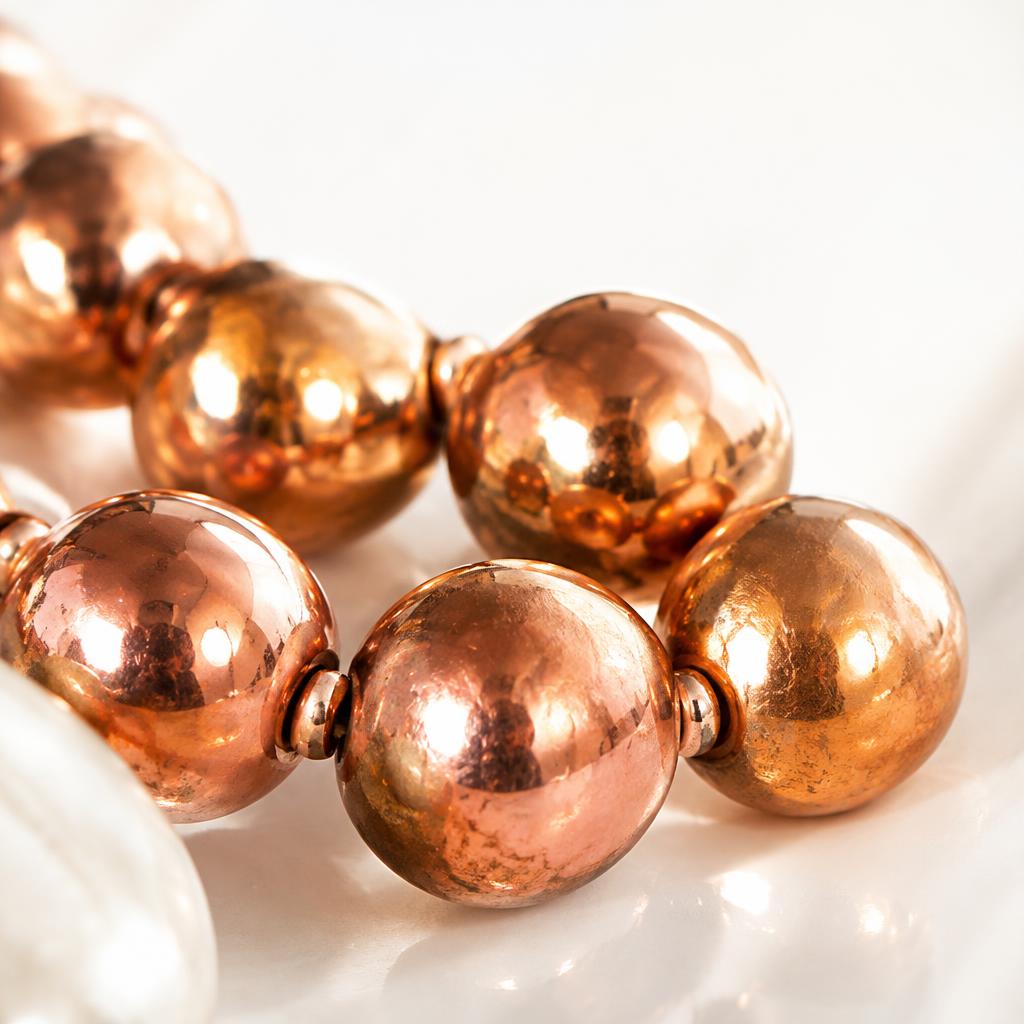
Caring for copper details
Copper naturally reacts with air, moisture and skin oils. A bright new surface may deepen toward bronze or brown, creating a patina that many wearers enjoy. To slow that change, wipe the bracelet with a soft dry cloth after wear and remove it before bathing, swimming or using household cleaners. If you prefer an aged finish, gentle wiping still matters because it removes grime while leaving the color variation intact.
Avoid soaking an assembled magnetic bracelet. Liquid can reach elastic cord, adhesives or the recesses around installed magnets. Acidic household mixtures may brighten bare copper, but they can also affect coatings, accent stones and nearby components. A dry jewelry cloth gives you more control. Store the piece separately from fine chains, mechanical watches and magnetic-stripe cards, ideally in a lined compartment where hard bead edges cannot scratch other jewelry.