Reading
Twelve facts about hematite
No myths, no promises — just what this dark, heavy, surprisingly historic mineral actually is. Every fact here is plain geology and history, and the stone is interesting enough without embellishment.
1. Its name means blood
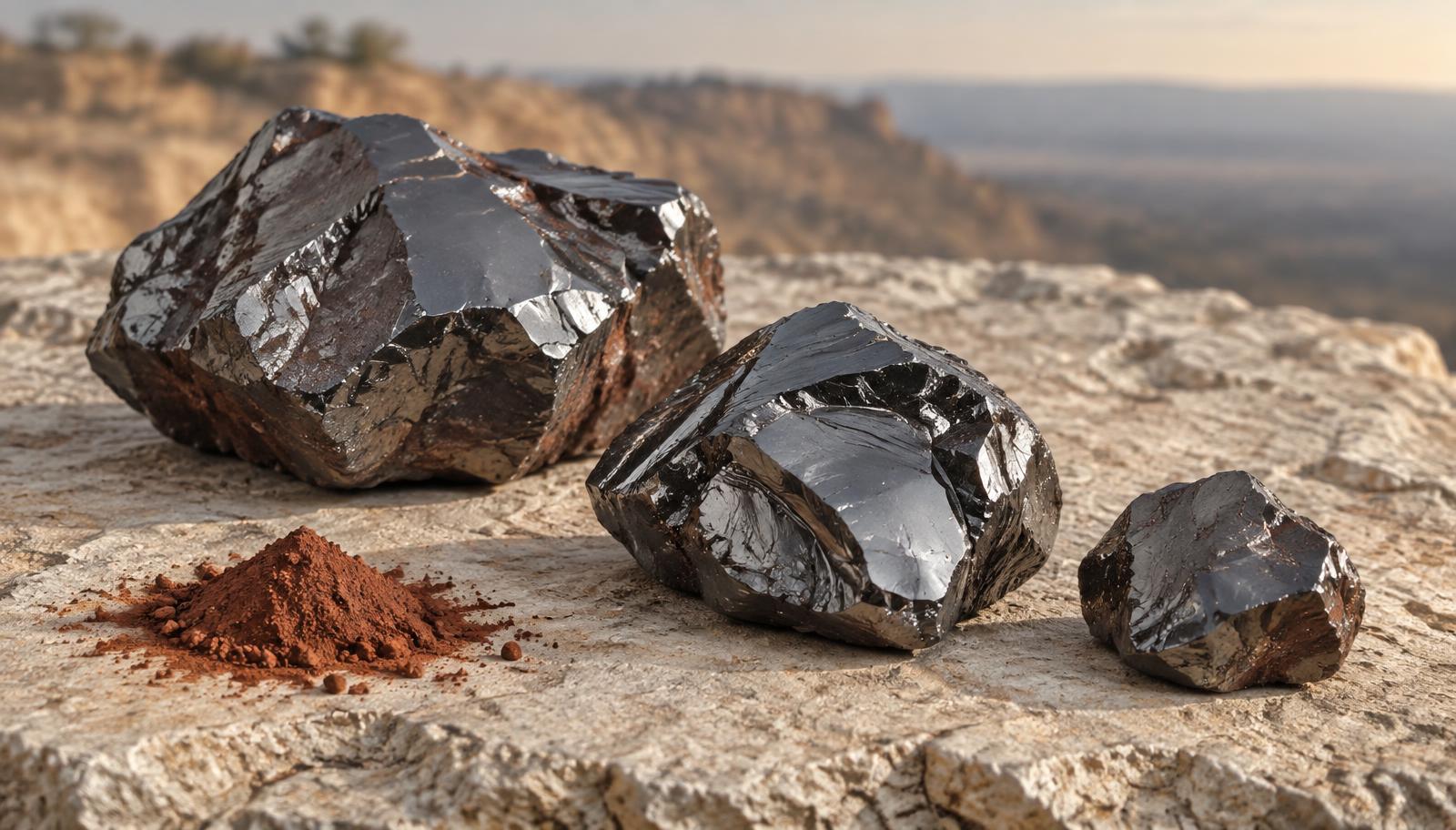
Hematite comes from the Greek haima, meaning blood. Rub hematite across unglazed ceramic and it leaves a reddish-brown streak — the giveaway that gave the stone its name, and still a real mineralogical test today.
2. It is iron oxide — rust's mineral cousin
Hematite is Fe2O3, the same chemical compound as ordinary rust. It is the mineral that turns red soil red and reddish rock red, and it is one of the most important iron ores on Earth.
3. It is only weakly magnetic on its own
Natural hematite barely responds to a household magnet. The strong pull in a magnetic hematite bracelet comes from beads that were magnetized during manufacturing so they hold a lasting charge. The stone is real; the magnetism is added on purpose.
4. Humans were grinding it 70,000 years ago
Red ochre — pigment made largely from ground hematite — turns up in some of the oldest known human art and burials. Before it was ever jewelry, hematite was one of humanity's first paints.
5. It has been polished into mirrors
Hematite takes a superb polish, and polished hematite plates were used as mirrors in the ancient world, from Egypt to the Americas. That mirror-like sheen is the same quality a good bead still shows.
6. It is one of the heaviest common jewelry stones
Hematite has a density of about 5.26 grams per cubic centimetre — roughly double that of quartz and far heavier than glass or plastic. A hematite strand feels noticeably substantial in the hand, which is one of the fastest ways to spot an imitation.
7. It is hard, but brittle
At 5.5 to 6.5 on the Mohs scale, hematite resists scratching better than glass — but it is also brittle, and a dropped bead on a hard floor can chip. Hard and tough are not the same thing in minerals.
8. It was carved into seals and signets
In ancient Greece and Rome, hematite was a favorite material for carved seal stones and intaglios. Its fine, even texture takes crisp detail, and its dark polish made engravings easy to read.
9. The Victorians loved dark, glossy stones
Nineteenth-century jewelry made heavy use of deep black, metallic and reflective materials, and hematite fit the mood perfectly. Much of the classic 'black bead' look in antique jewelry traces back to that era.
10. It is found on every continent
Hematite occurs worldwide — from the iron ranges of North America and Scandinavia to the red soils of Australia and the American Southwest. Anywhere there is iron-rich ground, hematite is rarely far away.
11. It feels cool for a reason
Because it is dense and conducts heat quickly, hematite feels cool against the skin for a second or two before warming. Plastic imitations warm instantly. It is a small detail, but a reliable one.
12. It pairs beautifully with color
The mirror-black surface makes an ideal setting for accent beads — turquoise, lapis, pearl, jade and the rest all read brighter against dark hematite. That contrast is exactly what a modern double-row design exploits.
MagBrace makes no health or medical claims of any kind. These bracelets are jewelry — worn for how they look and feel, nothing more.
Hematite and copper: a quick comparison
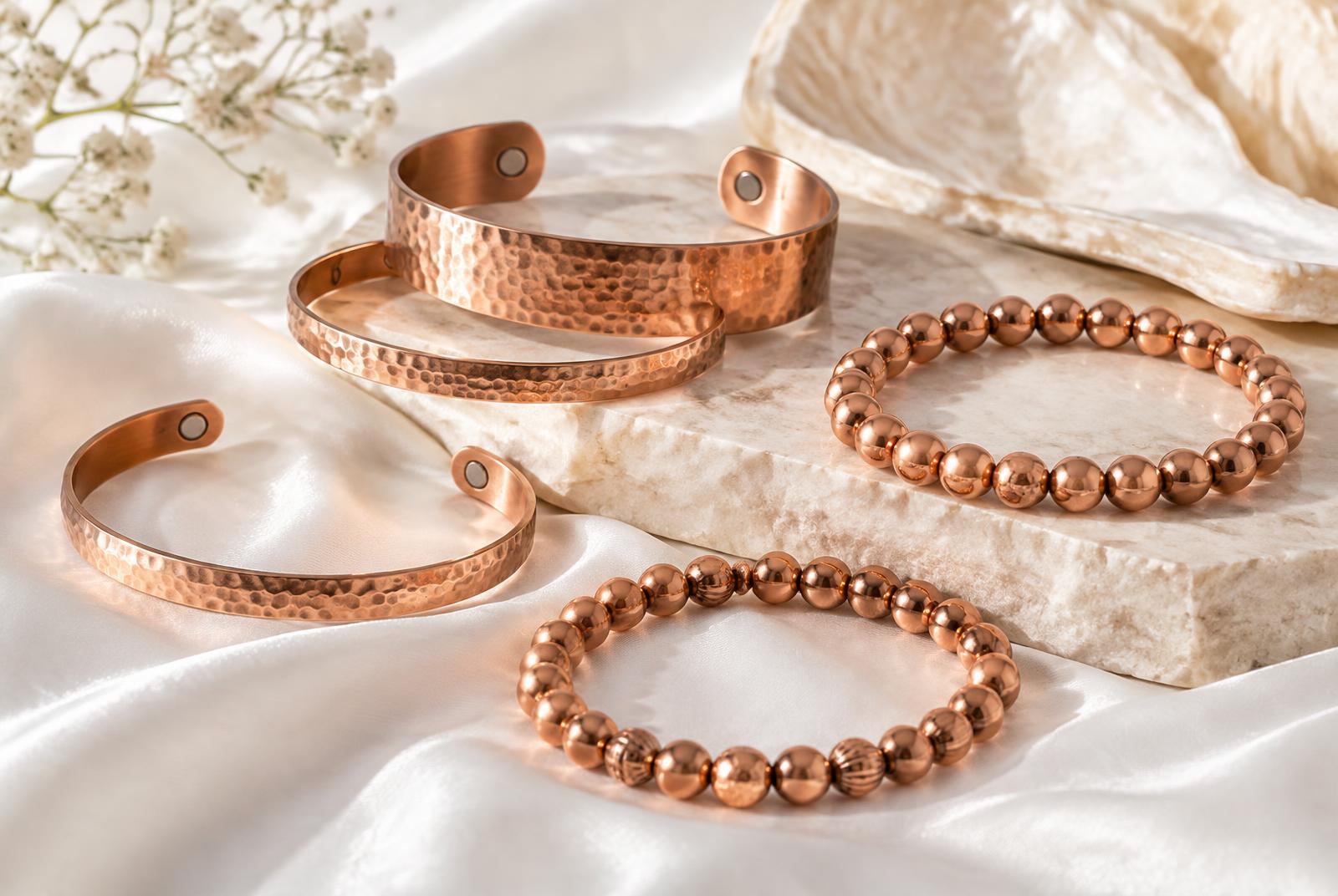
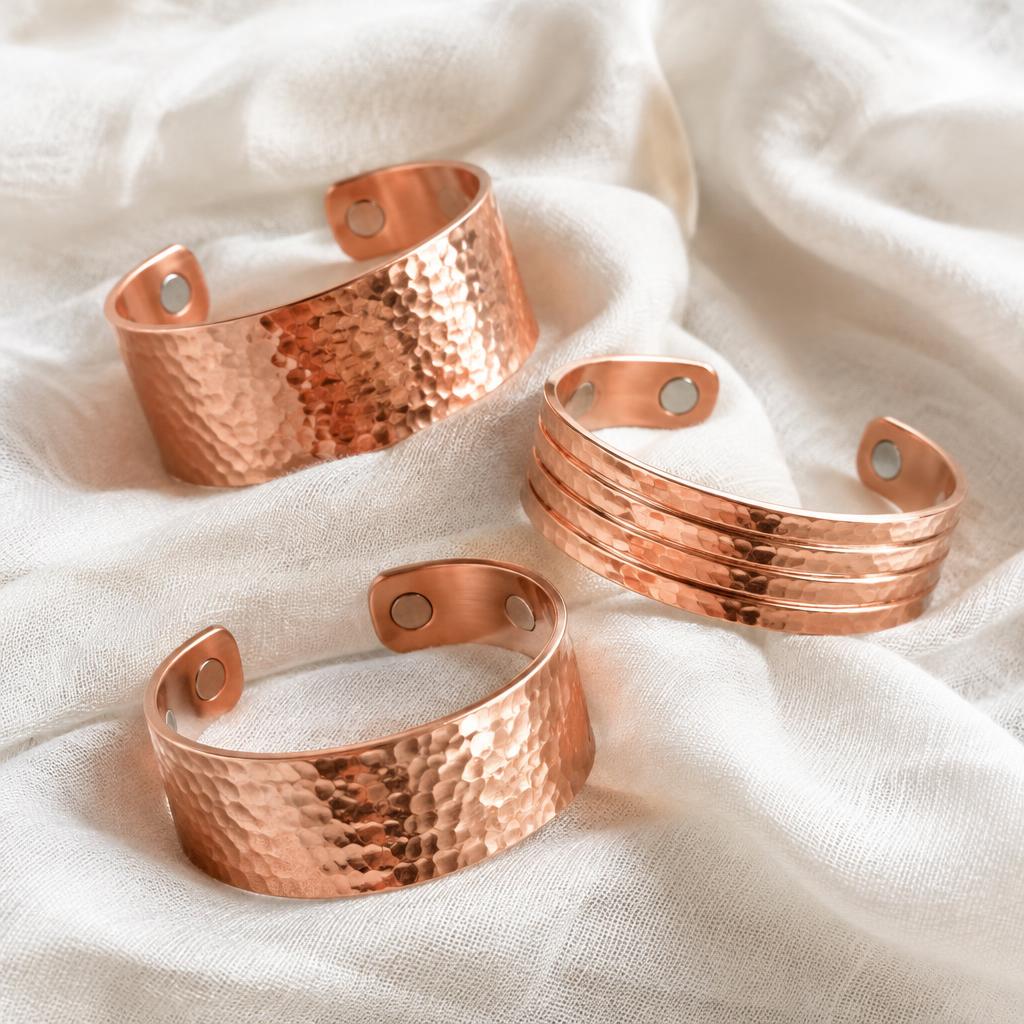
Hematite is an iron oxide mineral with a hardness of roughly 5.5 to 6.5 on the Mohs scale and a density around 5.3 grams per cubic centimeter, which is why a small strand feels surprisingly heavy. Copper is a pure metal, much softer at about 3 on the same scale, and it can be hammered, bent and drawn into wire. Those physical differences explain why hematite is usually cut into beads, while copper becomes cuffs, links and spacers.
They also age differently. Polished hematite keeps its mirror shine for years but can chip if dropped on stone tile. Copper reacts with air and moisture, slowly turning from rosy pink to brown and eventually green-blue if left untreated. Neither change is a defect; it is simply how each material behaves. Knowing these facts helps you choose a style that matches how carefully you want to look after your jewelry.
Facts about magnetic bracelet beads
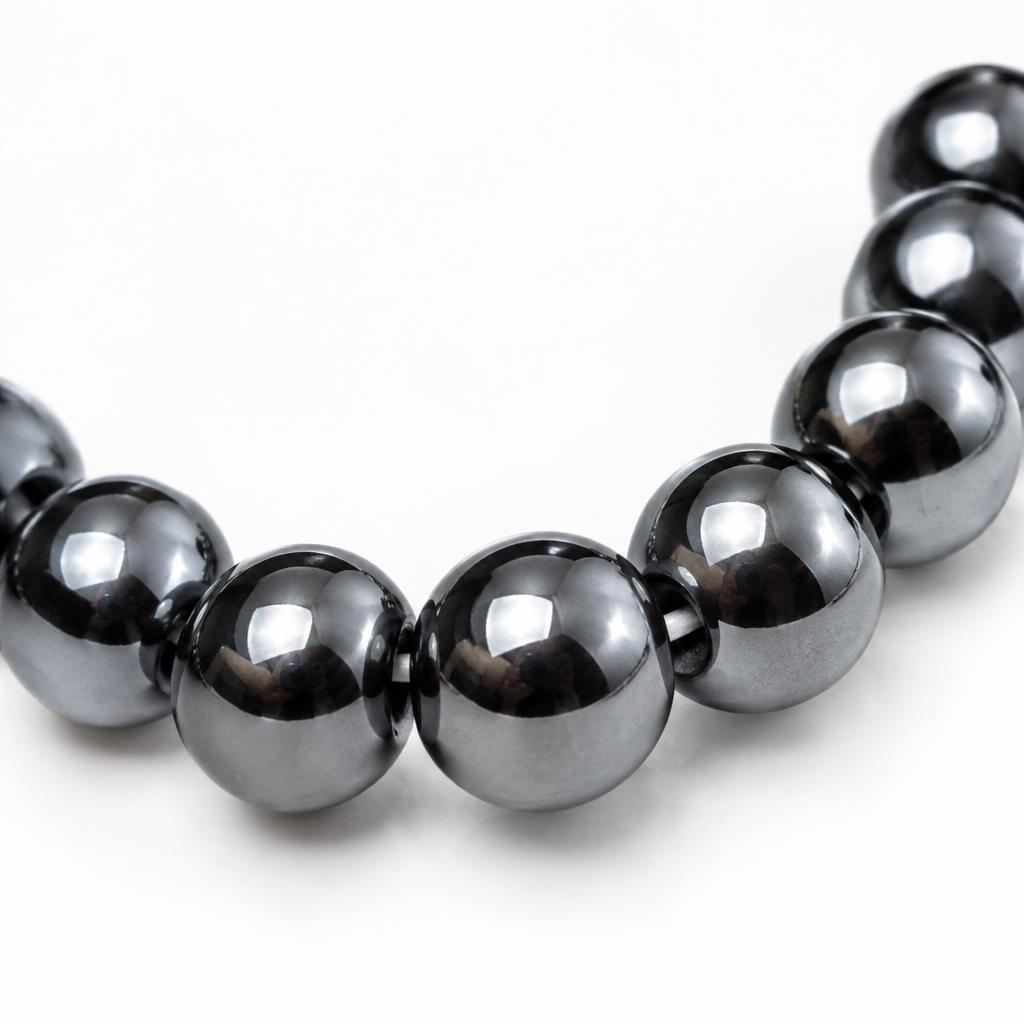
Natural hematite is only very weakly magnetic. Beads sold as magnetic hematite are typically manufactured, often from ferrite or similar iron-based ceramics, then polished to resemble the natural mineral. You can tell them apart quickly: magnetic beads snap toward each other and toward a steel paperclip, while natural hematite barely reacts.
Manufactured beads are uniform in size and color, which makes them practical for jewelry. They are also more brittle than they look, so a hard fall can crack them. Keeping magnetic strands apart from phones, bank cards and watches with mechanical movements is a sensible habit. These are practical jewelry facts, not wellness claims.