Why hematite responds to a magnet
Hematite is iron oxide — an iron mineral, the same one that gives rust and red soil their color. Iron and magnetism go hand in hand, so it's no surprise that hematite reacts when a magnet comes near it. Most gemstones don't react at all, which makes this one feel different the moment you try it.
Hold two of these beads close together and you feel a quiet, satisfying pull. That small moment is a big part of the appeal — it's a piece of jewelry with a little physics in it.
Natural hematite vs. magnetized beads
Hematite dug straight from the ground is only weakly attracted to a magnet — you wouldn't notice without careful testing. So where does the strong pull in a bracelet come from? The beads themselves.
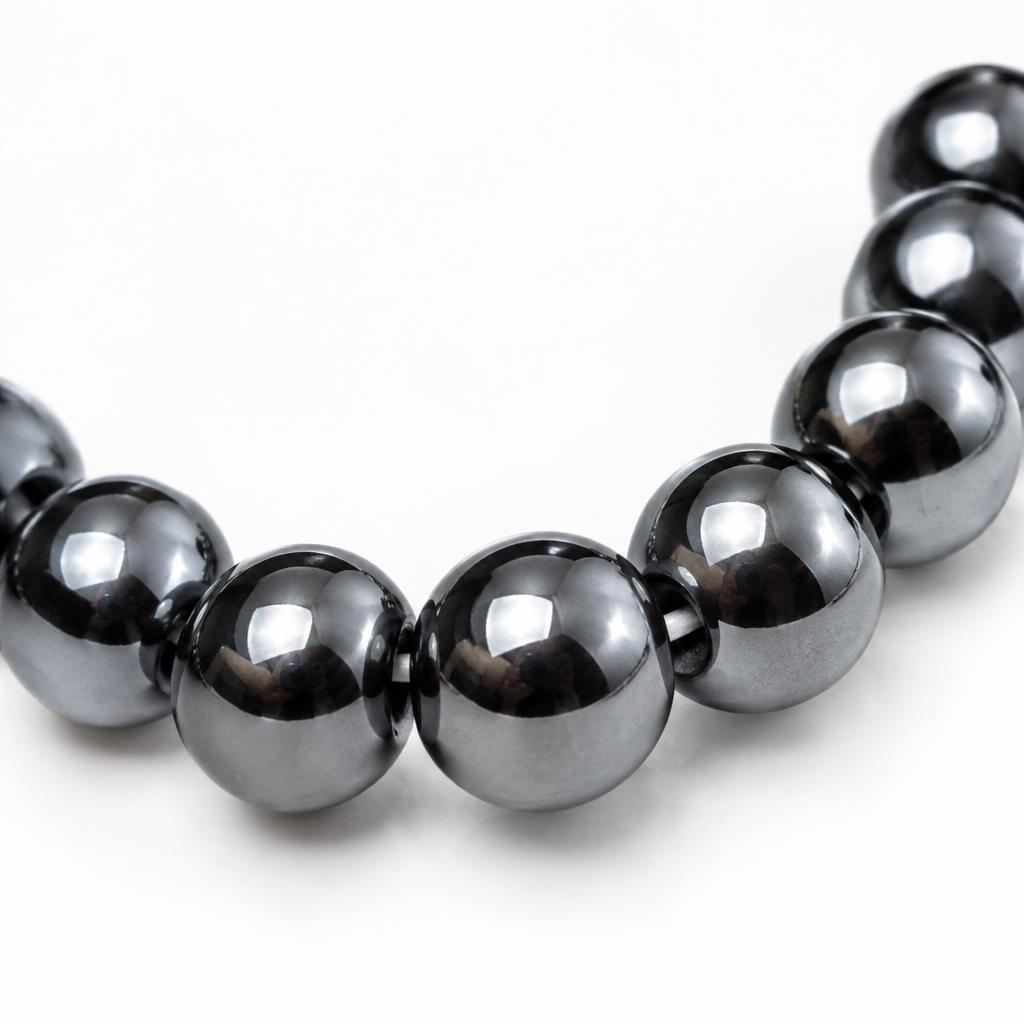
In "magnetic hematite" jewelry, the polished beads have been magnetized during manufacturing so they hold a lasting magnetic charge. That's what makes two beads snap together. It's still real hematite — the same iron mineral with the same gunmetal shine — just with magnetism added on purpose.
One practical note: because the beads are magnetic, people with a pacemaker or who are pregnant are commonly advised to skip magnetic jewelry. The bracelet itself is simply jewelry.
What the magnetism does — and doesn't — do
What it does: makes the beads feel dense and cool, gives them a satisfying click when strands meet, and pairs naturally with the stone's mirror-black finish.
What it doesn't do: anything health-related. MagBrace makes no health or medical claims of any kind — the magnetism is a character of the material, worn for how the bracelet looks and feels, nothing more.
MagBrace makes no health or medical claims of any kind. These bracelets are jewelry — worn for how they look and feel, nothing more.