Explainer
Hematite vs the other black stones
Onyx, obsidian, black tourmaline and hematite all look 'black bead' at first glance — but they are chemically unrelated materials that behave completely differently in the hand. Here is how to tell them apart.
Hematite: the iron one
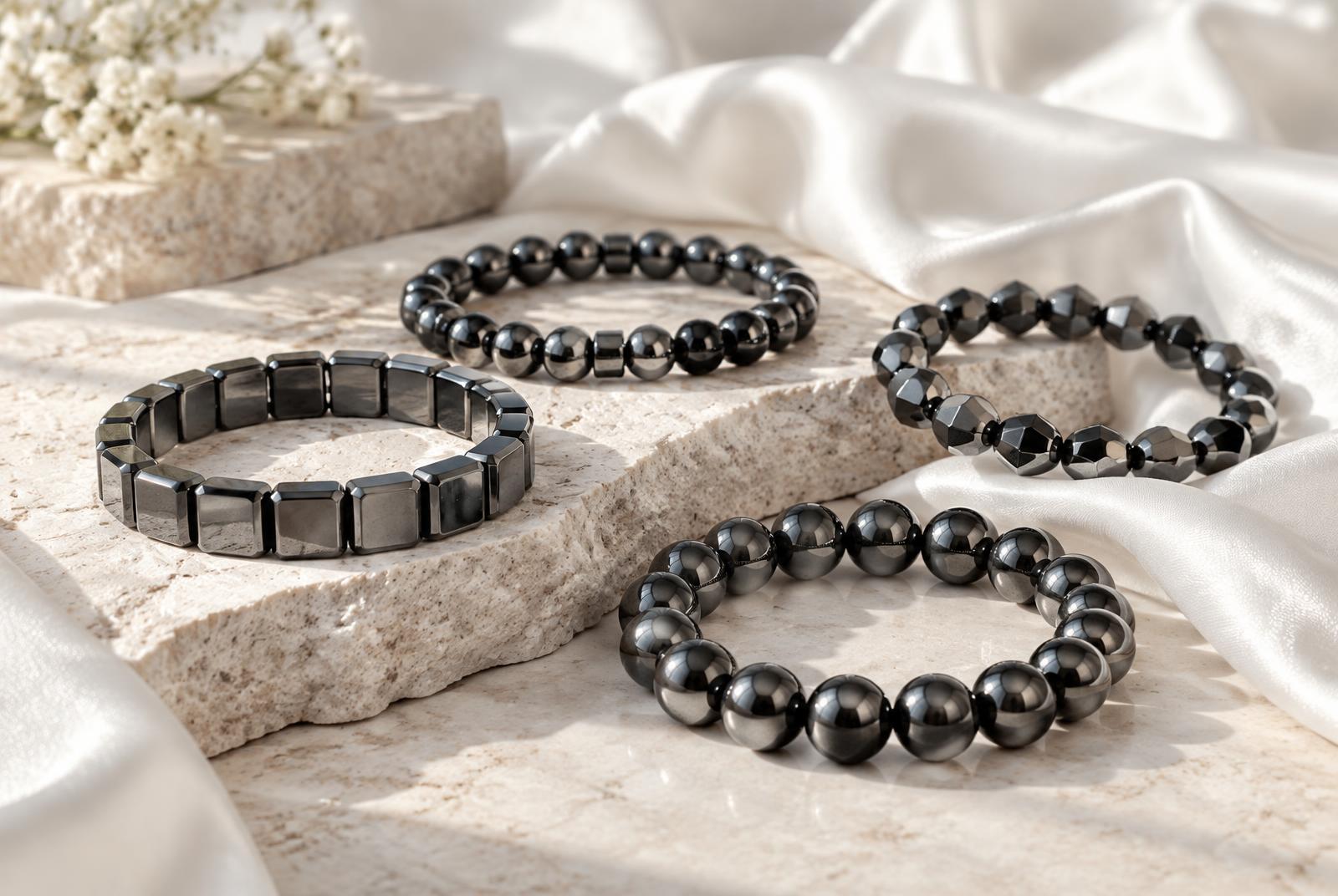
Hematite is a mineral — iron oxide, the same compound as rust. That origin explains everything else about it: it is remarkably dense for a jewelry stone, it takes a metallic, mirror-like polish no other common black stone can match, and it feels cool against the skin before warming. It is the only one of the four that can be magnetized, which is what makes a magnetic hematite bracelet possible.
Onyx: the layered quartz
Onyx is a variety of chalcedony — silicon dioxide, the chemistry of quartz. It forms in bands and layers, and most black onyx on the market is grey agate that has been dyed black, a centuries-old and accepted practice. Onyx has a glassy rather than metallic shine, weighs noticeably less than hematite of the same size, and is not magnetic.
Obsidian: the volcanic glass
Obsidian is not a mineral at all — it is natural glass, formed when lava cools too fast for crystals to grow. It is the lightest of the four, it has a smooth glassy luster with occasional concentric 'snowflake' patterns, and its edges fracture so cleanly that ancient peoples made cutting tools from it. Not magnetic, and warm-ish to the touch compared with hematite because glass conducts heat poorly.
Black tourmaline: the crystal
Black tourmaline, known to mineralogists as schorl, is a complex boron silicate that grows as long, striated crystals. Beads cut from it often show fine parallel grooves and a satiny rather than mirror shine. It is lighter than hematite, not magnetic, and its crystal structure makes it feel rougher and more organic next to hematite's machined evenness.
The quick field test
Weight first: hematite is roughly twice as dense as obsidian and about double onyx, so a strand that feels heavy is likely hematite. Shine second: hematite gleams like polished metal, the others like glass or satin. Temperature third: only hematite keeps that cool metallic chill for a beat. And magnetism, obviously, is unique to magnetized hematite.
One more distinction worth making: folklore assigns meanings to all four of these stones, and none of that is science. We treat the traditions as history and keep them where they belong — on our meanings page, clearly labeled as tradition.
MagBrace makes no health or medical claims of any kind. These bracelets are jewelry — worn for how they look and feel, nothing more.
Where copper fits among dark jewelry materials
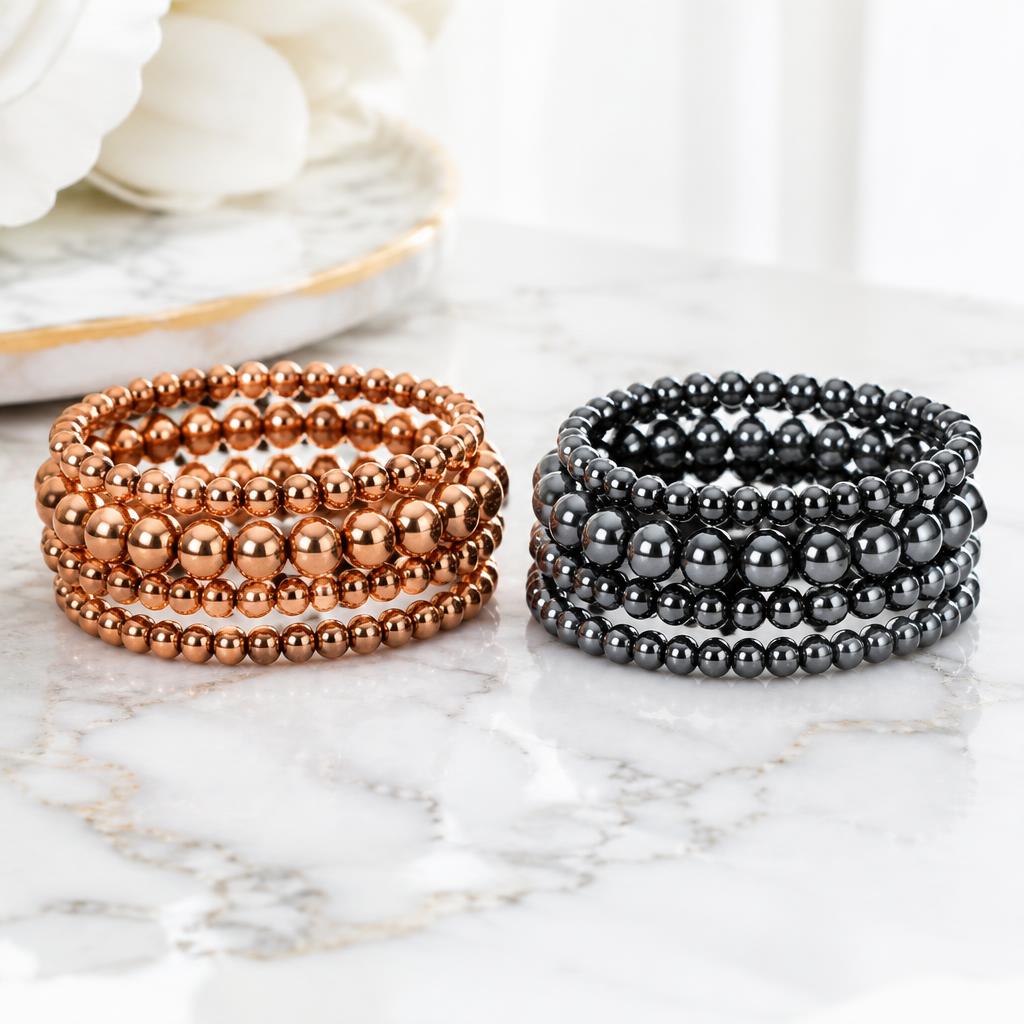
Black onyx, obsidian, lava stone, black tourmaline and hematite all give a dark look, but each has a different surface. Onyx is smooth and glassy, obsidian can show a soft sheen, lava stone is matte and porous, and hematite reflects light like polished steel. Copper is not a black stone at all, yet it is often worn alongside them because its warm color separates the dark beads visually.
If you wear several dark bracelets together, a single copper cuff or a strand with copper spacers keeps the stack from looking flat. Matte lava next to mirror-bright hematite and warm copper gives three distinct textures in one wrist, while staying understated enough for everyday clothes.
Telling dark materials apart at home
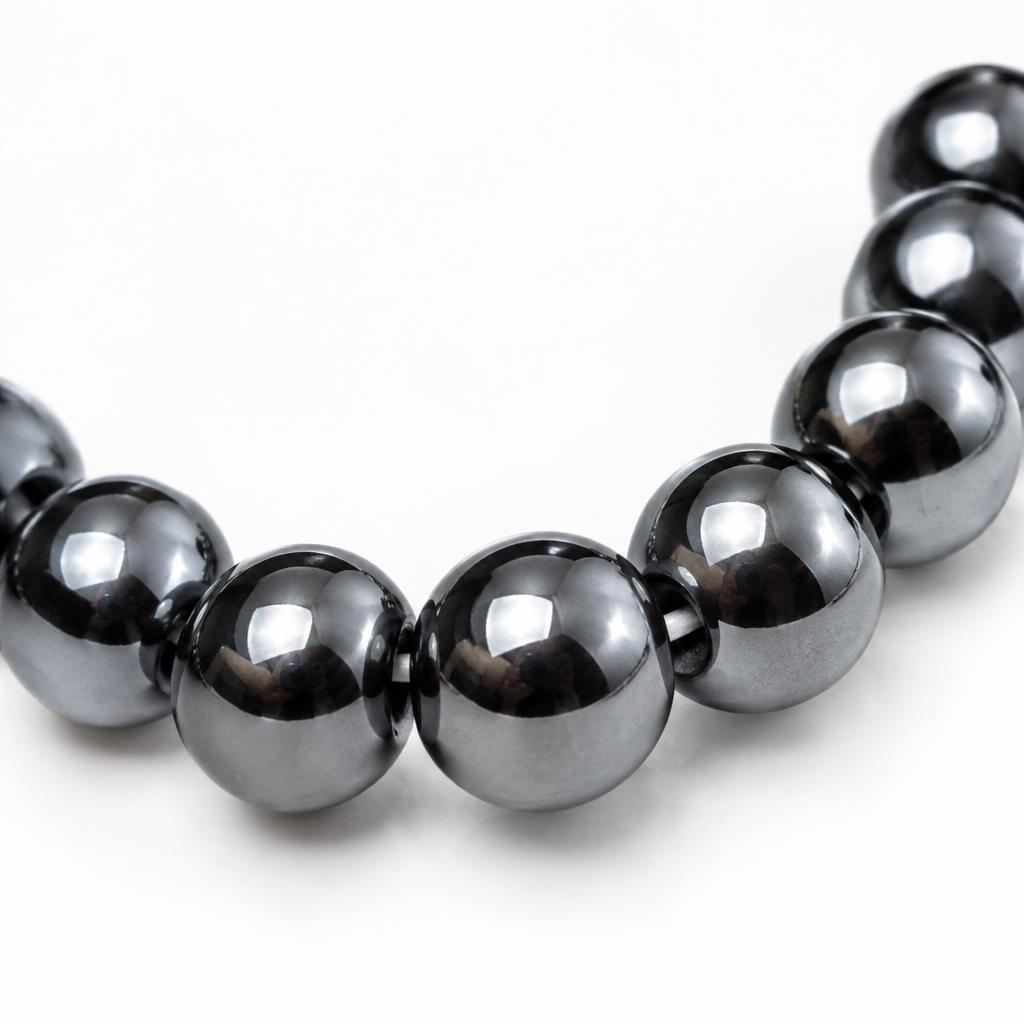
A few gentle checks help identify an unlabeled dark bracelet. Hematite feels noticeably heavy and cool. Lava stone feels light and rough. Onyx and obsidian are lighter than hematite and look glassy rather than metallic. A strong pull toward a fridge magnet usually points to manufactured magnetic beads rather than natural stone.
Copper parts can be checked differently: solid copper is not attracted to a magnet on its own, so if a copper-colored cuff sticks to a fridge magnet everywhere, it may be plated steel. If it only reacts at the ends, it probably contains inserted magnets. None of these checks require tools beyond what most homes already have.