Guide
How to wear a hematite bracelet
Gunmetal black goes with everything, which is exactly why hematite is one of the few stones that reads as genuinely unisex. Here is how to place it, stack it, and keep it from looking accidental.
Which wrist?
There is no rule, only ergonomics. Most people wear a bracelet on the non-dominant wrist simply because it takes fewer knocks against desks, steering wheels and door frames. If you already wear a watch, the classic arrangement is watch on one wrist, beads on the other — it gives each piece room to be seen.
If you prefer them together, put the bracelet on the side of the watch closest to your elbow, and leave a small gap. Stone against a watch case all day will scuff a soft finish, and hematite is harder than most watch metal.
One strand or a stack?
A single double-row hematite bracelet is already a statement: two rows of beads read as deliberate rather than casual. Worn alone it works for an office, a dinner, or a T-shirt.
For a stack, the reliable formula is odd numbers and varied texture — two or three bracelets where at least one differs in bead size or material. Three identical strands look like an accident; one hematite, one leather or cord, and one narrow metal band looks composed.
Keep the total under roughly half the visible length of your wrist. Beyond that the stack starts wearing you.
Choosing a color
The black hematite rows are the constant; the colored beads are the variable. A quick way to choose:
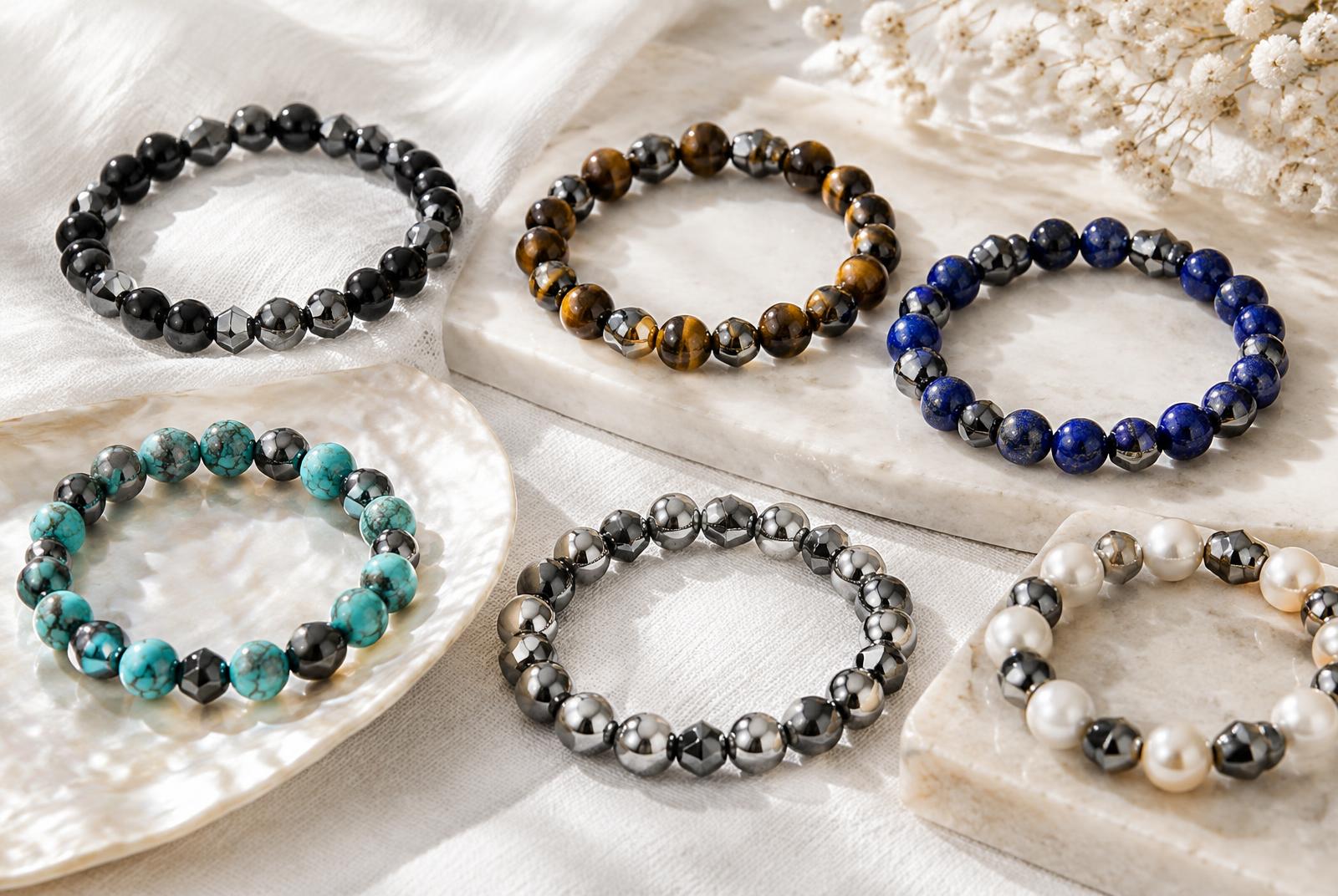
Turquoise and blue lift denim, white shirts and summer clothes — the highest-contrast, most casual picks. Tiger eye and amethyst sit in warm and deep tones that suit autumn palettes, browns, camel and burgundy. Silver and pearl are the quietest: almost monochrome, easy under a cuff, hard to over-wear. Lapis and jade bring saturated color that reads as jewelry rather than accessory. All-black is the one that disappears into everything and is usually the first bracelet people reach for.
A simple guideline: match the colored beads to something else you are wearing — a shirt, a scarf, the stone in a ring — and the whole outfit tightens up.
Fit, without a clasp
These bracelets are stretchable, so fit is about how the beads sit rather than about finding the right hole in a strap. The strand should rest on the wrist with a little slack — able to slide about a centimetre in each direction — and should never need to be forced over the hand.
Roll it on with your fingers together rather than yanking it. That habit alone is the difference between a bracelet that lasts years and one that gives out in a season.
Men, women, everyone
Hematite's appeal is that it is not coded either way. The finish is closer to polished steel than to a gemstone, the weight is substantial, and the shape is simple. That is why the same bracelet reads as a masculine everyday piece on one wrist and as sleek modern jewelry on another. Pick the color you keep looking at; there is no second consideration.
MagBrace makes no health or medical claims of any kind. These bracelets are jewelry — worn for how they look and feel, nothing more.
Using copper as the warm note
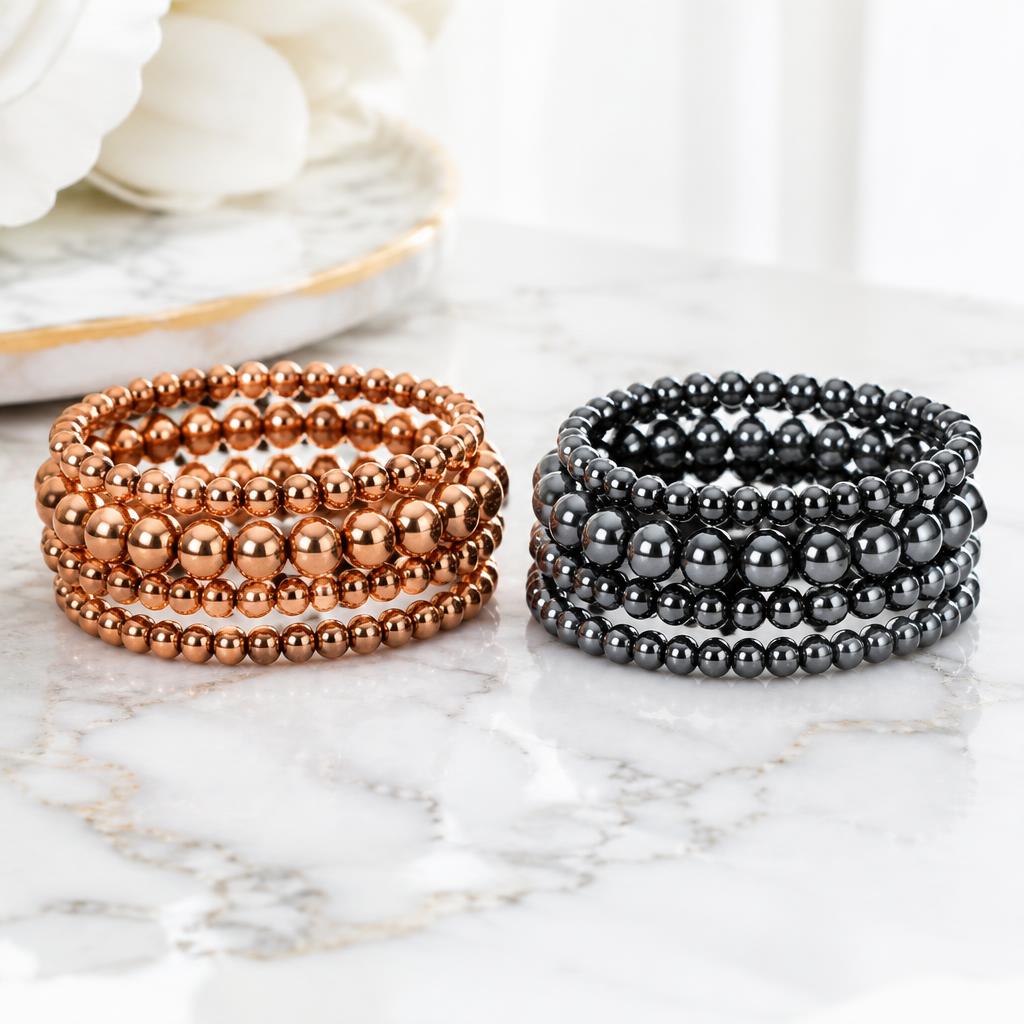
Copper sits between the coolness of silver and the richness of gold, so it works as a bridge when an outfit mixes metals. A narrow copper cuff beside dark hematite creates a clear warm-and-cool contrast. With olive, navy, charcoal, denim or white, that contrast looks intentional without becoming loud. An aged copper finish feels relaxed; a polished surface looks sharper and more formal.
When stacking, let one substantial bracelet lead and keep the others slimmer. A double-row hematite strand already has visual weight, so one narrow cuff or leather band is usually enough. Leave a little room between stone beads and a watch case to reduce rubbing. The most comfortable arrangement is often a watch on one wrist and bracelets on the other, but there is no fixed rule—balance, movement and the clothes you actually wear matter more.